Схема розділу
-
-
The main module learning objectives:
-
Remembering & Understanding (Levels 1–2):
Identify and describe the key socio-economic features, material culture, and geographical distribution of the Cucuteni-Trypillia culture, Scythians, and ancient Greek Black Sea colonies.
-
Applying & Analyzing (Levels 3–4):
Analyze and compare the structural differences between settled agrarian societies (Trypillians) and nomadic pastoral confederations (Scythians and Sarmatians) in terms of trade, warfare, and land utilization.
-
Evaluating (Level 5):
Assess the geopolitical and economic role of ancient Greek city-states (such as Olbia and Chersonesus) as a cultural bridge connecting the Mediterranean world with local steppe tribes.
-
Creating (Level 6):
Synthesize archaeological evidence and historical sources to formulate a structured presentation or comparative matrix illustrating the early civilizational contributions of ancient populations in Ukrainian territory.
-
-
The main module learning objectives:
-
Remembering & Understanding (Levels 1–2):
Explain the ethnogenesis of the early Slavs and describe the political, economic, and territorial expansion of Kyivan Rus under its first Rurikid rulers.
-
Analyzing (Levels 3–4):
Analyze the primary historical, geographical, and commercial factors—including the trade route "From the Varangians to the Greeks"—that contributed to the centralization and rise of the Kyivan Rus state.
-
Evaluating (Levels 5):
Critically evaluate the historical significance of early Slavic proto-state formations (such as the Antes confederation) and their role in laying the foundation for Kyivan Rus statehood.
-
-
Module learning objectives:
-
Remembering & Understanding (Levels 1-2):
Identify the major historical figures, political events, and architectural achievements during the reign of Volodymyr the Great and Yaroslav the Wise, including the Christianization of Kyivan Rus in 988 AD.
-
Applying & Analyzing (Levels 3-4):
Analyze the structural changes introduced by the Ruska Pravda legal code and evaluate how dynastic marriages transformed Kyivan Rus into an integrated player in medieval European diplomacy.
-
Evaluating (Level 5):
Critically evaluate the geopolitical, cultural, and socio-economic impact of adopting Orthodox Christianity on the internal development and international standing of Kyivan Rus.
-
Creating (Level 6):
Synthesize historical data, primary legal excerpts (Ruska Pravda), and architectural evidence to construct a comparative presentation illustrating the contrast between the centralized Golden Age and the subsequent period of feudal fragmentation.
-
Trade route "From the Varangians to the Greeks"
Key Terminology
-
"From the Varangians to the Greeks" — The primary commercial water route linking the Baltic and Black seas via Eastern European river systems.
-
Rurikid Dynasty — The ruling family that established governance over East Slavic lands beginning in the 9th century.
-
Polyuddya — The traditional annual tribute collection tour undertaken by the Grand Prince across subject tribal territories.
-
Uroky & Pohosty — Administrative and fiscal reforms introduced by Princess Olha to standardize tribute amounts and set collection points.
-
Druzhyna — The armed military retinue and close advisors surrounding the Grand Prince.
-
Khazar Khaganate — A dominant Turkic nomadic empire in the steppe region that previously controlled local trade and exacted tribute from eastern Slavs.
-
Rus-Byzantine Treaties — Diplomatic and commercial pacts established between Kyivan rulers and Byzantine emperors regulating trade and legal status.
-
-
-
Module Learning Objectives
1. Remembering (Level 1)
-
Identify key figures, dates, and locations associated with the Mongol conquest and the development of the Kingdom of Galicia-Volhynia (e.g., King Danylo of Halych, the Siege of Kyiv in 1240, battle of the Kalka River, Sarai, Yaroslav).
-
Define core institutional terms governing Mongol-Rus relations, such as yarlyk, baskak, dan', yam, and the Golden Horde.
2. Understanding and application (levels 2-3)
-
Explain how political fragmentation within late Kyivan Rus influenced the military vulnerability of East Slavic principalities during the Mongol western campaign (1237–1241).
-
Summarize the diplomatic strategy of King Danylo of Halych in balancing relations between the Golden Horde, the Papacy, and Western European monarchies.
-
Analyze primary source excerpts (e.g., The Galician-Volhynian Chronicle or accounts by Giovanni da Pian del Carpine) to extract evidence about 13th-century siege warfare and diplomatic protocol under Mongol suzerainty.
-
Map the geopolitical shifts in East-Central Europe following the fall of Kyiv, tracing the territorial borders, trade routes, and urban developments of Galicia-Volhynia.
4. Analysis (Level 4)
-
Compare the administrative and fiscal mechanisms of Mongol control in Galicia-Volhynia with those implemented in northeastern Rus principalities (e.g., Vladimir-Suzdal).
-
Examine the structural causes behind the ultimate decline of the Kingdom of Galicia-Volhynia in the mid-14th century and its subsequent partition between Poland and Lithuania.
5. Evaluation and Creating (Levels 5-6)
-
Assess the historical significance of Danylo’s royal coronation in 1253 by Papal legate, evaluating whether his Western orientation was a diplomatic success or a strategic failure.
-
Formulate an argumentative essay or research prospectus assessing whether Galicia-Volhynia should be viewed as the primary institutional successor state to Kyivan Rus.
-
-
The main module learning objectives:
1. Remembering (Level 1)
-
Identify key dates, treaties, figures, and institutional milestones associated with the Commonwealth era (e.g., Union of Lublin in 1569, Union of Brest in 1596, Prince Kostiantyn-Vasyl Ostrozky, Piotr Skarga, Kostiantyn Ostrozky).
-
Define essential socioeconomic and legal terms governing the period, such as szlachta (nobility), filvarok (manorial estate based on serf labor), panshchyna (corvée labor), szlachta democracy, Magdeburg Rights, and Uniate (Greek Catholic) Church.
2. Understanding (Level 2)
-
Explain the political and territorial transformations resulting from the Union of Lublin (1569), specifically the transfer of Ukrainian lands from the Grand Duchy of Lithuania to the Crown of Poland.
-
Summarize the causes, religious dynamics, and societal controversies surrounding the Union of Brest (1596) and the creation of the Ruthenian Uniate Church.
3. Application (Level 3)
-
Analyze primary source excerpts (e.g., polemical literature by Meletiy Smotrytsky, royal privileges, or local court records) to identify contemporary perspectives on religious identity and social conflict.
-
Examine how the growth of the filvarok economy altered trade routes, rural demographics, and social stratification across Ukrainian territories in the late 16th and early 17th centuries.
4. Analyzing (Level 4)
-
Compare the legal status, economic power, and cultural assimilation (Polonization) of the Ukrainian Orthodox magnates with that of the lower nobility (szlachta) and urban burghers.
-
Deconstruct the role of Orthodox brotherhoods (bratstva) and academies (e.g., Ostroh Academy, Kyiv-Mohyla Academy) as institutional responses to Counter-Reformation pressures and Catholic expansion.
5. Evaluation and Creating (Levels 5-6)
-
Assess the long-term historical impact of the Union of Lublin on the political orientation and national identity of early modern Ukrainian society.
-
Design a comparative matrix or visual timeline mapping the parallel developments of Catholic, Orthodox, and Uniate institutions in Ukrainian lands between 1569 and 1648.
-
-
Module learning objectives:
-
Identify key Cossack figures, administrative roles, and historical milestones, such as the establishment of the early Sich, the Treaty of Pereyaslav (1654), and the Constitution of 1710. (Level 1)
-
Explain the socio-economic and geopolitical factors that drove the emergence of Cossackdom, as well as the unique features of Cossack Baroque culture and the Kyiv-Mohyla Academy (Level 2)
-
Examine primary sources (e.g., Cossack chronicles, Pylyp Orlyk's Constitution) to illustrate the development of early modern Ukrainian legal and state-building thought (Level 3).
-
Analyze the internal rivalries and foreign interventions during "The Ruin" (Ruyina), as well as the evolution of the Cossack elite from a military democracy into a landowning nobility
-
Compare and contrast the diplomatic strategies, alliances, and state-building visions of key Hetmans (e.g., Bohdan Khmelnytsky, Ivan Vyhovsky, Ivan Mazepa) (Level 4).
-
Critique competing historiographical narratives surrounding pivotal turning points, particularly the 1654 Pereyaslav agreement and Mazepa’s alliance with Sweden.
-
Assess the long-term impact of Tsarist imperial policies, including the abolition of the Hetmanate and the destruction of the Zaporozhian Sich in 1775. (Level 5)
-
Formulate an evidence-based thesis evaluating the Cossack era as a foundational pillar of modern Ukrainian national identity and statehood (Level 6).
-
-
Topic 13: The Period of Ruin (1657–1687): Civil war, foreign interventions, territorial partitioning (Treaty of Andrusovo), and political fragmentation
(for watching in English open video on YouTube)
Key terminology:
-
The Ruin (Ruina / Руїна) – The period of political fragmentation, devastating civil war, and foreign interventions in Ukraine following Bohdan Khmelnytsky’s death.
-
Cossack Hetmanate (Kozatskyi Hetmanat / Козацький Гетьманат) – The autonomous Cossack state (officially the Zaporozhian Host) divided during this era.
-
Right-Bank Ukraine (Pravoberezhna Ukraina / Правобережна Україна) – Territory west of the Dnipro River, which fell under Polish and Ottoman spheres of influence.
-
Left-Bank Ukraine (Livoberezhna Ukraina / Лівобережна Україна) – Territory east of the Dnipro River, which retained internal autonomy under Muscovite suzerainty.
-
Cossack Starshyna (Kozatska Starshyna / Козацька старшина) – The privileged ruling military and administrative officer class of the Hetmanate.
-
Treaty of Hadiach (1658) (Hadiatskyi traktat / Гадяцький трактат) – An unfulfilled agreement to reform the Polish-Lithuanian Commonwealth into a tripartite state with the Grand Duchy of Rus.
-
Truce of Andrusovo (1667) (Andrusivske peremyria / Андрусівське перемир'я) – The Muscovite-Polish treaty that officially partitioned the Hetmanate along the Dnipro River.
-
Eternal Peace Treaty of 1686 (Vichnyi myr / Вічний мир) – The definitive accord between Poland and Muscovy confirming Ukraine’s partition and assigning Kyiv to Muscovy.
-
Chorna Rada / Black Council (Chorna rada / Чорна рада) – A general assembly of ordinary Cossacks and commoners, marked by political volatility and mob rule (e.g., Nizhyn, 1663).
-
Chyhyryn Campaigns (1677–1678) (Chyhyrynski pokhody / Чигиринські походи) – Major Ottoman-Muscovite military clashes that resulted in the destruction of the historic Cossack capital.
-
-
Topic 14 (seminar): Hetman Ivan Mazepa and the Northern War: Cultural Baroque flourishing, the alliance with Sweden, Battle of Poltava (1709), and progressive abolition of Cossack autonomy
Key terminology:
-
Ivan Mazepa (Ivan Mazepa / Іван Мазепа) – The long-ruling Hetman of Ukraine (1687–1709), renowned patron of arts and education, who ultimately allied with Sweden to break free from Muscovite domination.
-
Mazepa Baroque (Mazepynske baroko / Мазепинське бароко) – A distinctive architectural and cultural synthesis in late 17th- and early 18th-century Ukraine, characterized by massive patron-funded construction of churches, monasteries, and educational institutions (such as the Kyiv-Mohyla Academy).
-
Great Northern War (1700–1721) (Velyka Pivnichna viina / Велика Північна війна) – The pan-European conflict between the Tsardom of Muscovy and the Swedish Empire, which forced the Cossack Hetmanate into heavy military and financial burdens.
-
Swedish Alliance (1708) (Shvedskyi soiuz / Шведський союз) – The secret diplomatic and military pact concluded between Hetman Ivan Mazepa and King Charles XII of Sweden to secure Ukraine’s independence from Muscovite suzerainty.
-
Sack of Baturyn (1708) (Baturynska trahediia / Батуринська трагедія) – The brutal destruction of the Hetman’s capital by Muscovite forces under Alexander Menshikov, involving the massacre of its civilian population and garrison to suppress Mazepa’s uprising.
-
Battle of Poltava (1709) (Poltavska bytva / Полтавська битва) – The decisive battle in which Peter I’s forces defeated Charles XII and Mazepa, marking a major geopolitical turning point in East-Central Europe.
-
Constitution of Pylyp Orlyk (1710) (Konstytutsiia Pylypa Orlyka / Конституція Пилипа Орлика) – A landmark constitutional document drafted in exile by Mazepa's successor, establishing the separation of powers, Cossack rights, and the rule of law.
-
Reshetylivka Articles (1709) (Reshetylivski statti / Решетилівські статті) – Restrictive administrative articles imposed by Peter I on the subsequent Hetman (Ivan Skoropadsky), severely limiting Cossack self-governance.
-
First Little Russian Collegium (1722–1727) (Persha Malorosijska kolehiia / Перша Малоросійська колегія) – A Muscovite administrative body of imperial officers established to oversee the Hetman’s governance, taxation, and military administration.
-
Destruction of the Zaporozhian Sich (1709) (Znyshchennia Zaporizkoi Sichi / Знищення Запорозької Січі) – The razing of the Chortomlyk Sich by imperial troops in retaliation for the Zaporozhian Cossacks supporting Mazepa.
-
-
The main module learning objectives:
Remembering & Understanding (Levels 1–2)
-
Identify key 18th–19th century imperial decrees and legal measures—such as Catherine II’s enserfment decree (1783), the Valuev Circular (1863), and the Ems Ukaz (1876)—and describe their primary restrictions on Ukrainian language, culture, and administrative self-governance.
-
Explain the socio-economic mechanisms of serfdom (kripasnytstvo) and how the imperial Russian administration integrated former Cossack lands into imperial provinces (namestnichestva/gubernias).
Applying & Analyzing (Levels 3–4)
-
Analyze the structural impact of anti-Ukrainian imperial legislation on the development of Ukrainian print culture, education, and institutional nation-building initiatives throughout the 19th century.
-
Compare the strategies of imperial cultural assimilation and socio-economic control enforced by the Russian Empire with the political and cultural conditions of Ukrainian lands under Habsburg rule during the same period.
Evaluating (Level 5)
-
Assess the historical effectiveness and long-term consequences of imperial suppression policies (such as the Valuev Circular and Ems Ukaz) in halting the Ukrainian national revival, evaluating the adaptive responses of Ukrainian intellectuals (gromadas, underground publishing, and academic networks).
Creating (Level 6)
-
Synthesize primary source extracts, legal decrees, and historiographical perspectives to construct a comparative thematic matrix or structured analytical framework illustrating the multi-stage dismantling of Ukrainian autonomy and language rights by imperial authorities.
-
-
Key Terminology:
-
Valuev Circular (1863) — a secret circular issued by the Minister of Internal Affairs of the Russian Empire, Pyotr Valuev, which suspended the publication of books in the Ukrainian language ("Little Russian dialect"), asserting that "a separate Little Russian language has never existed, does not exist, and shall not exist."
-
Ems Ukaz (1876) — a decree issued by Russian Emperor Alexander II in the German town of Bad Ems, which completely banned the import of Ukrainian-language publications from abroad, the printing and publication of original Ukrainian works and translations, as well as Ukrainian-language theatrical performances and public readings.
-
Censorship — a system of state control over the content and dissemination of information, printed publications, and theatrical performances to prevent the spread of ideas disapproved of by the imperial regime.
-
"Muscophiles" (Russophiles) — a socio-political movement in Galicia and other Ukrainian lands under Austro-Hungarian rule whose adherents advocated for cultural and political unity with the Russian people (in opposition to the Ukrainophiles/populists).
-
"Pseudo-folk" Literature — a term used by tsarist officials and censors to restrict the Ukrainian language exclusively to an ethnographic and domestic sphere ("for the common people"), while banning its use in science, publicism, or high literature.
-
Kyiv Archeographical Commission / South-Western Section of the Imperial Russian Geographical Society — scholarly organizations in Ukraine whose activities became targets for the imperial authorities; notably, the South-Western Section was closed down in 1876 under accusations of "separatism."
-
Hromadas (Communities) — semi-legal cultural, educational, and public associations of the Ukrainian intelligentsia (in Kyiv, Kharkiv, Poltava, etc.) that engaged in publishing and educational work and became targets of tsarist censorship and persecution.
-
Russification — the deliberate policy of the Russian autocracy aimed at supplanting the Ukrainian language and culture from all spheres of life and imposing the Russian language and identity.
-
"Little Russian Dialect" — the official designation used by the authorities of the Russian Empire regarding the Ukrainian language, deliberately denying it the status of an independent, full-fledged Slavic language.
-
Dragomanovism / Political Emigration — the forced departure of Ukrainian scholars and cultural figures (such as Mykhailo Drahomanov) abroad (specifically to Switzerland) due to the impossibility of freely publishing Ukrainian books and conducting educational work within the Russian Empire.
-
-
The Main Learning Objectives:
1. Remember (Knowledge Retrieval)
-
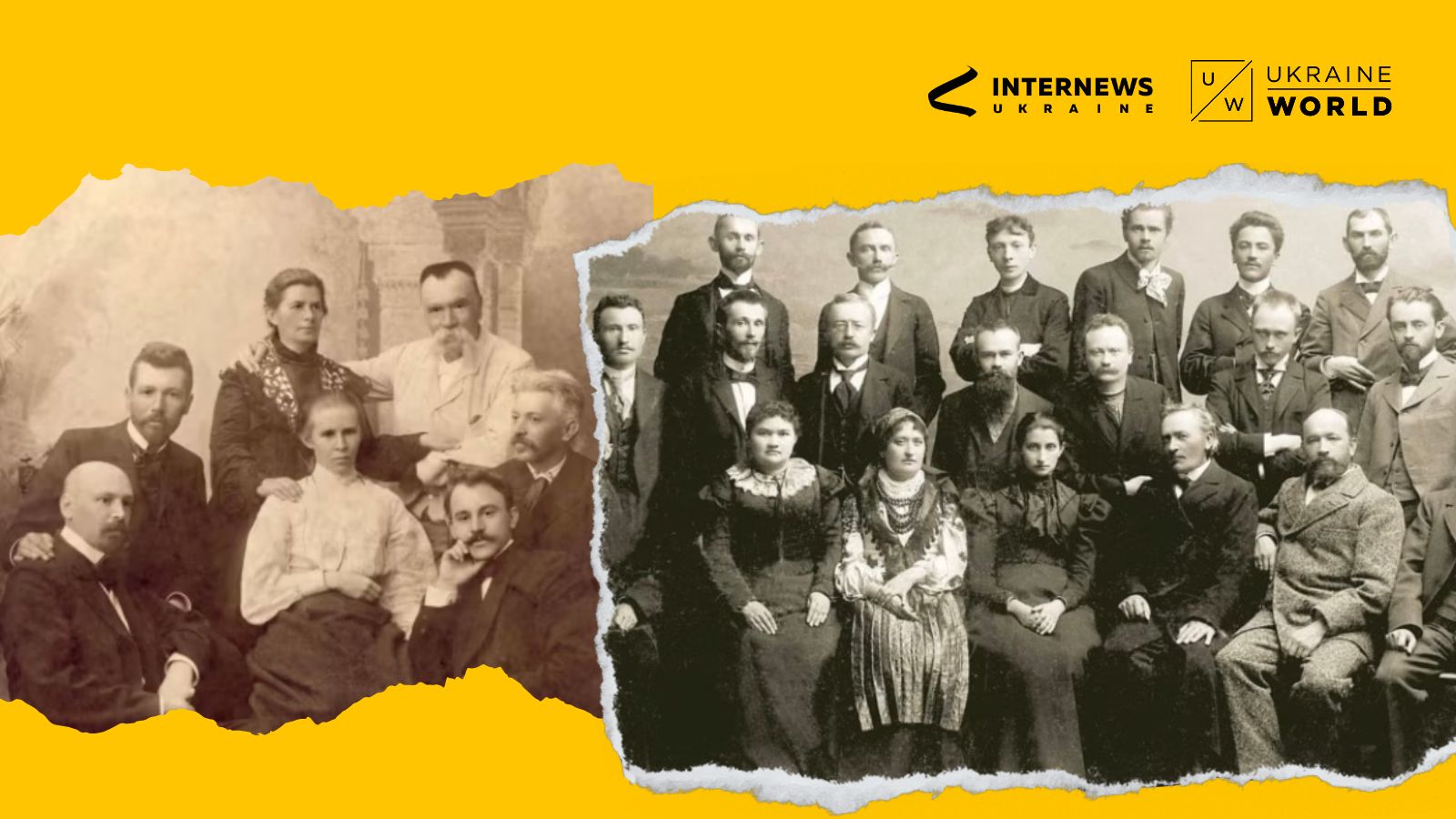
Define core terms: Ukrainophilism, Hromada, Prosvita, Modernism, and Theatre of Coryphaei.
-
List key figures: Volodymyr Antonovych, Mykhailo Drahomanov, Lesya Ukrainka, Mykhailo Kotsyubynsky, Mykola Lysenko, and Les Kurbas.
-
Recall major dates: founding of Prosvita (1868) and publication of Literaturno-Naukovyi Vistnyk.
2. Understand (Comprehension)
-
Explain how the national movement transitioned from ethnographic romanticism to socio-political action.
-
Summarize the role of Galicia as the "Ukrainian Piedmont" during times of tsarist censorship in Dnieper Ukraine.
-
Describe how Ukrainian modernism combined European aesthetic trends with national motifs.
3. Apply (Implementation)
-
Categorize primary source excerpts into ideological currents (Populist, Modernist, Social Democratic, National Democratic).
-
Demonstrate how period literature (Franko, Ukrainka, Kobylyanska) reflected social justice and gender emancipation.
4. Analyze (Structural Analysis)
-
Compare Drahomanov’s federalist vision with state-oriented and nationalist political frameworks.
-
Analyze how the 1905 Russian Revolution expanded the Ukrainian press and Prosvita networks.
-
Deconstruct the tension between Populism (narodnytstvo) and Modernism (modernizm).
5. Evaluate (Critique & Judgement)
-
Assess the reach of cultural institutions (Prosvita, NTSh) among rural versus urban populations.
-
Evaluate the legacy of early 20th-century cultural revival in preparing the ground for the 1917–1921 War of Independence.
6. Create (Synthesis)
-
Design a thematic syllabus or exhibition on the evolution of Ukrainian arts from Populism to the Avant-Garde.
-
Formulate a research essay comparing Ukraine's national revival with other East-Central European awakenings (e.g., Czech or Irish).
-